
- Gold/Au $7185.85
- Silver/Ag $115.20
- Platinum/Pt $2910.26
- Palladium/Pd $2395.41
- Last Update: 7th Oct 2025 @ 15:56pm


Gold Weight vs Gold Purity: What Matters More When Valuing Gold?
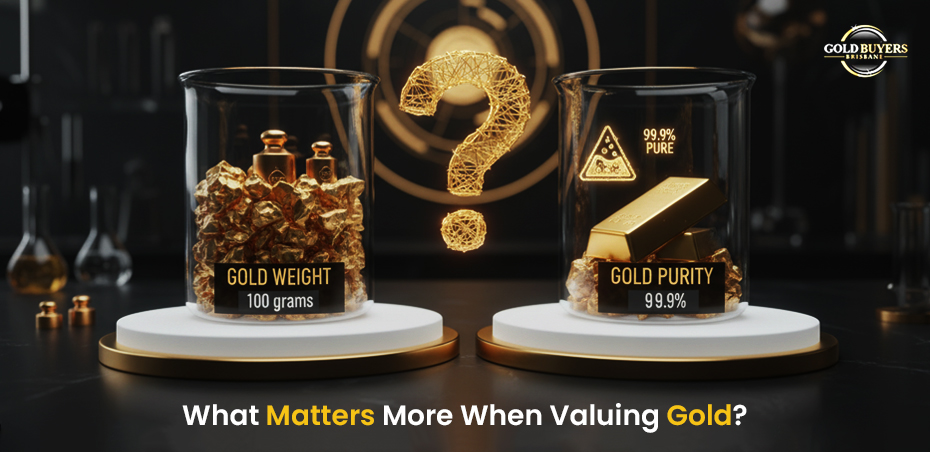
When people evaluate gold, the first thing they usually notice is how heavy it feels. A solid, weighty piece instinctively appears more valuable, which is why many sellers assume that weight alone determines worth when seeking cash for gold. In reality, gold valuation is far more complex.
Two items with identical weight can have significantly different values depending on the amount of pure gold they contain. This misunderstanding often leads to disappointment, undervaluation, or unrealistic expectations during buying or selling. Gold weight and gold purity are not opposing factors; they work together to define true value. Understanding this relationship is essential whether you are purchasing jewellery, investing in bullion, or selling old gold items.
This blog explores gold weight and gold purity in detail, explains how they interact in real-world valuation, and clears up common myths, so you can make informed, confident decisions based on facts rather than assumptions.
Understanding Gold Weight: What Does It Really Measure?
Gold weight refers to the total mass of a gold item, including both pure gold and any additional metals used in the alloy. It is typically measured in kilograms, grams or troy ounces, with grams being the most common unit for jewellery and smaller gold items. At first glance, weight appears straightforward—the heavier the item, the more gold it must contain. However, this assumption only holds when comparing items of the same purity.
Weight alone does not distinguish between pure gold and alloy metals such as copper, silver, or zinc. For example, a thick, heavy bracelet made from low-purity gold may contain less actual gold than a slimmer, lighter piece made from higher-purity gold. This is why weight is considered a quantitative measure rather than a qualitative one. It tells you how much material exists, but not how valuable that material truly is.
Weight becomes especially important when calculating base value, storage considerations, transportation, and refining potential for bullion or old gold. However, without accurate purity information, weight cannot reliably indicate true gold value. Understanding this limitation helps avoid overestimating heavier items and undervaluing lighter but purer gold.
What Is Gold Purity and Why Does It Matter So Much?
Gold purity measures how much pure gold is present in an item and is most commonly expressed using the karat system or as a percentage. Pure gold is classified as 24K, meaning it contains approximately 99.9% gold. Lower karat gold consists of a blend of gold and other metals such as copper, silver, or zinc, which are added to enhance strength, durability, and everyday wearability.
For example, 18K gold contains 75% pure gold, while 14K gold contains 58.3%. This means that in a 10-gram piece of 18K gold, only 7.5 grams are pure gold, with the remaining weight made up of alloy metals. Although these additional metals contribute to the item’s overall weight, they do not hold the same intrinsic value as gold.
In Australia, most jewellery is commonly made in 9K gold (37.5%) or 18K gold (75%), reflecting a balance between durability and gold content suited to everyday wear. This differs from many Middle Eastern and Asian markets, where 22K gold is more widely used due to cultural preferences for higher-purity gold.
Purity directly affects value because gold is priced based on its pure content rather than its total mass. Even small differences in purity can lead to significant changes in price, particularly for heavier items. Without understanding purity, sellers may focus on size or feel rather than actual gold content, leading to inaccurate valuations and unrealistic expectations.
Which Matters More: Purity or Weight?
When gold is evaluated side by side, purity generally has a stronger influence than weight—but only in terms of value per gram. Higher purity means a greater proportion of the item’s mass is composed of actual gold, directly increasing its intrinsic worth. A small difference in purity can outweigh several extra grams of lower-grade material.
That said, weight still plays a crucial role. The total value is ultimately determined by the amount of pure gold in the item, meaning both factors must be considered together. Context is what shifts their relative importance. In investment-grade gold, including transactions handled by Bullion Dealers Brisbane, purity takes priority because pricing is tightly aligned with gold content. In jewellery or mixed items, weight becomes more relevant once purity is established, as it determines overall quantity.
Rather than asking which factor matters more in isolation, the better question is how they interact. Purity defines quality, weight defines quantity, and value emerges only when the two are evaluated together. Understanding this balance removes confusion and allows gold to be assessed objectively, regardless of form or use.
Master Gold Valuation Now
Discover how purity and weight combine for accurate pricing. Get a free quote today.
Karat vs Carat: Understanding the Difference Without Confusion
One of the most common mistakes people make when evaluating gold is confusing the terms karat and carat. Although they sound similar, they measure entirely different things, and misunderstanding them can lead to inaccurate assumptions about value. Karat (K) is used to measure the purity of gold, while carat (ct) is a unit of weight used exclusively for gemstones such as diamonds and sapphires.
When a gold item is marked as 18K or 14K, it does not describe how heavy the item is. Instead, it indicates how much pure gold is present in the alloy. For example, 18K gold contains 18 parts gold out of 24, making it 75% pure. By contrast, a one-carat diamond simply weighs 0.2 grams and has no connection to gold purity or composition.
This confusion often occurs in jewellery that combines gold with gemstones. Buyers may incorrectly assume that a higher carat number increases the value of the gold itself. Understanding this distinction is essential for accurate valuation, as it allows you to assess gold content and gemstone weight separately, ensuring clearer expectations and better-informed decisions.
How Gold Weight and Purity Work Together to Determine Value
Gold value is determined by the interaction between how much gold is present and how pure that gold is. Neither factor works in isolation, and professionals always evaluate them together to reach an accurate valuation.
At a practical level, this relationship works as follows:
- Weight establishes quantity, showing how much total material the item contains.
- Purity establishes quality, identifying what percentage of that weight is actual gold.
- Market price converts gold content into monetary value, based on current rates.
To calculate the actual gold content accurately, professionals rely on a simple and transparent formula:
Pure Gold Content = Total Weight × (Karat ÷ 24)
This formula isolates the portion of the item that is pure gold before pricing is applied. For example, an item weighing 20 grams at 18K purity contains 75% gold. Dividing 18 by 24 gives 0.75, and multiplying this by 20 grams results in 15 grams of pure gold. That pure gold weight is then priced according to the prevailing gold rate.
The remaining weight consists of alloy metals that add mass but not equivalent value. This explains why heavier gold does not always result in a higher price. By evaluating purity first and weight second, gold valuation becomes objective, consistent, and free from assumptions based solely on size or feel.
Real-World Gold Valuation: Selling, Testing, and Market Factors
In real-world transactions, gold valuation follows a structured and methodical process designed to ensure precision. While weight and purity form the technical foundation, valuation also depends on how accurately these factors are verified and applied.
Key elements professionals consider include:
- Purity verification using XRF analysis, fire assay, or touchstone testing.
- Precise weighing adjusted to exclude gemstones, clasps, or non-gold components.
- Current market pricing is based on real-time global gold rates.
Once purity is established, the item’s total weight is recalculated to reflect only its pure gold content. This adjusted figure is then multiplied by the prevailing market rate to determine intrinsic value. This process is consistently applied by reputable Gold Dealers Brisbane to maintain accuracy across different gold forms, including jewellery, scrap, and investment pieces.
Market conditions influence timing rather than structure. While daily price movements affect payout levels, the underlying calculation method remains unchanged. Design, finish, and visual appeal rarely affect intrinsic valuation, as pricing is driven strictly by verified gold content.
This standardised approach ensures objective pricing based on measurable criteria rather than subjective appearance or perceived heft.
Common Myths About Gold Weight and Gold Purity
Gold is often misjudged because people rely on shortcuts rather than on how valuation actually works. The following myths persist largely due to a misunderstanding of how gold behaves as a material and how pricing systems are applied.

Surface shine indicates a higher value
Brightness or polish has no link to gold content. Surface appearance is cosmetic and can be enhanced without changing purity, meaning visual appeal alone offers no insight into intrinsic worth.
Mixed-metal jewellery cannot be accurately valued
Many assume pieces containing multiple metals are difficult to assess. In reality, modern testing methods isolate gold content precisely, regardless of how many non-gold elements are present.
Gold value changes based on local trends
Local demand may influence retail pricing, but intrinsic gold value follows global benchmarks. Market sentiment does not alter the measurable gold content within an item.
Scratched or worn gold loses its intrinsic value
Physical wear affects appearance, not composition. As long as the gold content remains unchanged, scratches or surface damage do not reduce the intrinsic gold value.
Gold purity varies within a single piece
Some believe different sections of an item contain different purity levels. In standard manufacturing, purity is uniform throughout, ensuring consistent valuation across the entire piece.
Gold-plated items hold value similar to solid gold
Gold-plated jewellery often feels weighty, but the gold layer is usually only a few microns thick. Most of the weight comes from the base metal underneath, meaning plated items contain minimal recoverable gold.
Understanding these lesser-known myths reinforces how gold is evaluated based on material properties and measurable standards, not visual condition or perception.
Conclusion: Understanding the Balance That Defines Gold Value
Gold value is not determined by a single measurement. Weight and purity serve different purposes, yet neither provides a complete picture on its own. Weight tells you how much material exists, while purity reveals how much of that material is genuinely gold. Only when both are assessed together does true value become clear.
Throughout this guide, we’ve explored how misconceptions arise when one factor is overemphasised and how accurate valuation relies on measurable standards rather than perception. Whether gold appears large or small, new or worn, its worth is grounded in composition, not appearance.
By understanding how weight and purity function together, decisions around buying, selling, or holding gold become clearer and more informed. Instead of relying on assumptions, you gain the ability to evaluate gold logically, consistently, and with confidence—no matter the form it takes.
Ready to Sell Your Gold?
Visit our secure store today.
About the Author
Raj, Specialist at Gold Buyers Brisbane
With deep expertise in the gold buying industry, Raj leads Gold Buyers Brisbane’s mission to provide fair and transparent cash offers for gold. Committed to customer satisfaction, Raj ensures clients receive trusted valuations and seamless transactions, leveraging extensive knowledge of the local market and current gold trends.
About the Company
Gold Buyers Brisbane is a premier gold buying service based in Brisbane, dedicated to offering the highest cash payouts for gold. With a focus on trust, transparency, and expert evaluations, Gold Buyers Brisbane helps customers get the best value for their gold items quickly and securely. Serving the Brisbane community, the company blends industry expertise with customer-centric service to make gold selling a confident and rewarding experience.
Frequently Asked Questions
-
Why does gold purity impact its price?
Gold purity affects price because it determines how much of the item is pure gold. Higher purity means a greater percentage of gold content, which directly increases intrinsic value regardless of the item’s size or design. -
What determines the price of 1 gram of pure gold?
The price of 1 gram of 99.9% pure gold depends on the current global gold rate. This rate fluctuates daily based on international demand, currency movements, and broader economic conditions. -
Is heavier gold always more valuable?
Not always. While weight shows how much material is present, value depends on how much of that weight is pure gold. A lighter, higher-purity item can be worth more than a heavier, lower-purity gold. -
How is the gold value calculated during evaluation?
Gold value is calculated by identifying purity first, then measuring weight to determine pure gold content. That amount is multiplied by the prevailing market rate to arrive at the item’s intrinsic value. -
Can gold jewellery with gemstones be accurately valued?
Yes. During valuation, gemstones and non-gold parts are excluded from the weight. Only the gold content is measured and priced, ensuring accurate valuation regardless of design or additional materials.
 Previous