
- Gold/Au $7205.34
- Silver/Ag $119.13
- Platinum/Pt $3105.18
- Palladium/Pd $2457.11
- Last Update: 7th Oct 2025 @ 15:56pm


Gold Hallmarks Explained: What 375, 585, 750, and Other Gold Stamps Mean
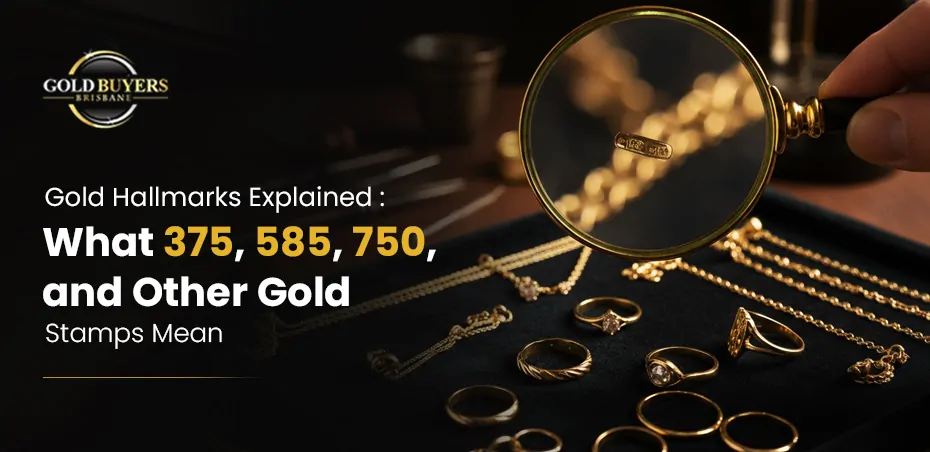
Gold jewellery often carries tiny numbers or symbols stamped inside rings, on necklace clasps, or along bracelet links. These markings, known as gold hallmarks, may look insignificant, but they reveal important information about a piece of jewellery, including its gold purity, authenticity, and sometimes even the manufacturer.
Many people assume that all gold jewellery is made from pure gold, but this is rarely the case. Most jewellery is created using gold alloys, where pure gold is combined with other metals to improve durability and strength. Hallmarks help identify the gold content of a piece, offering a reliable way to understand its authenticity and quality.
If you have ever noticed small numbers like 375, 585, or 750 stamped on your jewellery and wondered what they mean, you are not alone. In this guide, we will explain how gold hallmarks work, what the most common symbols represent, and how these tiny stamps can help determine the value of your gold jewellery.
What Is a Gold Hallmark?
A gold hallmark is a small stamp applied to jewellery or precious metal items that indicates the purity and authenticity of the metal. These markings act as a quality assurance system within the jewellery industry, helping buyers and sellers identify what a piece of jewellery is actually made from.
Hallmarks have been used for centuries as a way to protect consumers and ensure that gold items meet recognised purity standards. In many countries, such as the United Kingdom, gold jewellery is independently tested and hallmarked by an official assay office. However, Australia does not operate a government-regulated hallmarking system, meaning jewellers often stamp their own purity marks.
Most gold hallmarks provide key details about the jewellery, including:
- The purity of the gold
- The manufacturer’s or maker’s mark
- The assay office or authority that verified the metal
- Sometimes, the year the jewellery was tested or produced
Although hallmarking systems vary across countries, the purpose remains the same: to provide a reliable indication of gold content and authenticity.
Why Gold Hallmarks Matter
Gold hallmarks provide important information about a piece of jewellery and help both buyers and sellers understand its true value. By identifying the metal’s composition and authenticity, these small stamps make it easier to verify the quality of gold items.
Here are a few key reasons why gold hallmarks are important:
Authenticity Verification
Hallmarks help confirm whether a piece of jewellery is made from genuine gold rather than gold-plated or imitation metal. This reduces the risk of fraud and gives buyers greater confidence when purchasing gold jewellery.
Purity Identification
The hallmark indicates the percentage of gold contained in the item. Since jewellery is often made from gold alloys, these stamps provide a reliable way to determine how much pure gold is actually present.
Fair Pricing When Selling Gold
When gold jewellery is sold, buyers use the purity level shown in the hallmark to estimate the amount of gold in the item. Higher purity jewellery generally contains more gold, which can result in a higher payout.
If you would like to learn more about how purity levels influence gold prices, you can read our detailed guide on how gold purity and hallmarks affect your payout.
Common Gold Hallmark Numbers and What They Mean
One of the most common types of gold hallmarks uses numbers that indicate the metal’s purity in parts per thousand. These stamps show how much pure gold is contained in a piece of jewellery compared to other metals used in the alloy.
The following purity stamps are among the most widely used in gold jewellery.
| Karat | Hallmark | Gold Content (Percentage) |
|---|---|---|
| 24K | 999 | 99.90% |
| 22K | 916 | 91.60% |
| 18K | 750 | 75% |
| 14K | 585 | 58.50% |
| 10K | 417 | 41.7% |
| 9K | 375 | 37.50% |
Karat vs Hallmark Numbers: What’s the Difference?
Gold purity can be expressed in two ways: karats (K) or hallmark numbers.
- Karats divide gold into 24 parts, where 24K represents pure gold.
- Hallmark numbers represent purity in parts per thousand.
For example:
- 18K gold = 18/24 gold = 750 hallmark
- 14K gold = 14/24 gold = 585 hallmark
999 – 24K Gold
A stamp of 999 indicates that the gold is 99.9% pure, also known as 24-karat gold. Because pure gold is very soft, it is most commonly used in gold bars and investment bullion rather than everyday jewellery.
916 – 22K Gold
The 916 hallmark means the item contains 91.6% pure gold, which corresponds to 22-karat gold. Jewellery of this purity has a rich yellow appearance and is commonly used in high-quality or traditional gold pieces.
750 – 18K Gold
A 750 stamp indicates that the jewellery contains 75% pure gold mixed with 25% other metals such as silver or copper. This combination improves durability while still maintaining a high gold content, making 18K gold popular in fine jewellery.
585 – 14K Gold
The 585 hallmark represents 58.5% gold, also known as 14-karat gold. This type of gold is widely used for everyday jewellery because it offers a good balance between strength, durability, and gold content.
375 – 9K Gold
A 375 stamp indicates 37.5% gold content, which corresponds to 9-karat gold. While it contains less pure gold than higher karat jewellery, it is still considered genuine gold and is often used in durable and affordable jewellery pieces.
Symbols Found in Gold Hallmarks
While numbers indicate the purity of gold, hallmarks can also include small symbols or letters that provide additional information about the jewellery. These markings help identify who produced the piece, where it was tested, and sometimes even when it was certified.
Some common symbols found in gold hallmarks include:
Maker’s Mark
The maker’s mark identifies the jewellery manufacturer or designer responsible for producing the piece. This mark usually appears as initials, a logo, or a small symbol registered by the jeweller, allowing the maker or brand behind the jewellery to be recognised.
Assay Office Mark
An assay office mark indicates the official authority that tested and verified the gold’s purity. These marks are common in countries with formal hallmarking systems, such as the United Kingdom and parts of Europe. However, most jewellery sold in Australia does not include assay office marks because the country does not operate government-run assay offices.
Date Letter
Some hallmarking systems include a date letter that represents the year the jewellery was officially hallmarked. This small letter or symbol can sometimes help determine when the piece was produced or certified, which may be useful when identifying older or antique jewellery.
Standard Mark
The standard mark confirms the purity classification of the metal. It usually appears alongside a numerical stamp such as 750 for 18K gold or 585 for 14K gold, indicating the proportion of pure gold contained in the jewellery alloy.
Gold Hallmarking in Australia
Hallmarking regulations vary around the world. Unlike countries such as the United Kingdom, Australia does not operate a government-regulated hallmarking system or official assay offices. Instead, the jewellery industry is largely self-regulated, and many jewellers stamp their own purity marks based on the gold content of the piece.
Because Australia does not have government assay offices, gold dealers in Brisbane often rely on professional testing methods such as XRF analysis to accurately verify gold purity.
Many Australian jewellers voluntarily stamp jewellery using international purity standards such as 375, 585, 750, or 916.
However, not all gold jewellery carries a hallmark. Older, imported, or handmade pieces may sometimes be unmarked even if they contain genuine gold. In these cases, professional gold buyers use specialised testing methods such as XRF analysis or acid testing to accurately determine the metal’s composition.
If you would like to learn more about the difference between stamped and unstamped jewellery, you can read our guide on hallmarked vs unmarked gold when selling.
Where to Find Gold Hallmarks on Jewellery
Gold hallmarks are typically placed in small, discreet areas of jewellery so they do not interfere with the overall design. Because these stamps are usually very small, they can sometimes be difficult to notice without careful inspection.
Common locations where gold hallmarks are found include:
- Inside the band of a ring
- On the clasp of a necklace
- Near the fastening of a bracelet
- On the back of a pendant
Since these markings are often extremely small, they may only be visible with the help of a magnifying glass or a jeweller’s loupe, which makes it easier to read the numbers or symbols clearly.
What If Your Gold Has No Hallmark?
Not all gold jewellery carries a visible hallmark. Older pieces, imported jewellery, or handmade items may sometimes be unmarked, even if they contain genuine gold. In some cases, hallmarks may also fade or wear away over time, especially inside ring bands where constant friction can gradually reduce the visibility of the stamp.
When a hallmark is missing, the authenticity and purity of the metal can still be verified using professional testing methods. Gold buyers and jewellers use specialised tools to analyse the composition of the metal without damaging the jewellery.
Common testing methods include:
- Acid Testing: A small, harmless scratch is made on a testing stone and treated with acid to observe the reaction.
- Electronic Testers: These measure the electrical conductivity of the metal.
- XRF Analysis: The most accurate method; an X-ray scan performed using XRF technology provides a complete breakdown of every metal present in the alloy.
These techniques allow professionals to accurately determine the purity of gold and confirm whether an item contains genuine precious metal.
Even without a hallmark, gold jewellery can still hold significant value depending on its weight, purity, and current market price.
Not Sure What Your Gold Is Worth?
If your jewellery has no hallmark or the stamp is difficult to read, professional testing can accurately determine its purity and value.
Common Fake Gold Stamps to Watch For
Not every stamp found on jewellery indicates solid gold. Some markings show that a piece is gold-plated or coated with a thin layer of gold rather than made from solid gold.
Understanding these stamps can help prevent confusion when evaluating jewellery.
Some common markings that indicate gold plating or non-solid gold include:
GP (Gold Plated)
GP stands for gold-plated, meaning a thin layer of gold has been applied to the surface of another metal. The base metal underneath is usually brass, copper, or another alloy, which means the item contains only a small amount of actual gold.
GF (Gold Filled)
Gold-filled jewellery contains a thicker layer of gold bonded to a base metal. While it includes more gold than standard gold-plated jewellery and is generally more durable, it is not considered solid gold.
HGE (Heavy Gold Electroplate)
HGE indicates that the jewellery has been electroplated with a thicker coating of gold compared to standard plating. Even with the heavier coating, the core material remains a base metal, so the gold content is still limited.
RGP (Rolled Gold Plate)
RGP refers to jewellery made using a process where a thin sheet of gold is mechanically bonded to another metal. This method creates a stronger bond than basic plating, but still means the jewellery is not made entirely of solid gold.
These markings help differentiate between solid gold jewellery and items that only contain a surface layer of gold. If you are unsure about a piece, professional testing can accurately determine the metal composition.
How to Tell If a Gold Hallmark Is Genuine
Although hallmarks are intended to certify gold purity, not all stamps are reliable indicators of authenticity. In some cases, jewellery may carry misleading or counterfeit marks.
There are several ways to evaluate whether a hallmark is genuine.
Check the Stamp Quality
Authentic hallmarks are usually clean, sharp, and evenly stamped. Blurry, uneven, or poorly formed markings may indicate that the stamp was added later or applied improperly, which can raise doubts about the jewellery’s authenticity.
Look for Consistent Purity Marks
Most genuine gold jewellery follows recognised purity standards such as 375, 585, 750, or 916. If a piece displays unusual numbers or inconsistent markings, it may require further verification to confirm the actual gold content.
Compare With Known Hallmark Symbols
Some hallmarking systems include specific symbols for assay offices, manufacturers, or certification authorities. Comparing a mark with official hallmark reference guides can help determine whether the stamp is genuine and correctly registered.
Use Professional Testing
The most reliable way to confirm authenticity is through professional testing methods such as XRF analysis or acid testing, which accurately determine the metal composition.
Because hallmarks can sometimes be misleading or incomplete, professional evaluation remains the most dependable way to verify gold jewellery.
How Hallmarks Affect the Value of Your Gold
Gold hallmarks provide an initial indication of a jewellery item’s purity, which is one of the most important factors in determining its value. When gold jewellery is sold, the purity level helps buyers estimate how much pure gold is contained in the piece. Many people researching the value of their jewellery before searching online for cash for gold near me use hallmarks as a quick way to estimate the gold content.
For example, 18K gold (750) contains a higher percentage of gold than 14K gold (585), which means it generally holds a greater intrinsic value.
When evaluating gold jewellery, buyers typically consider several key factors:
- Gold purity, as indicated by the hallmark or verified through testing
- The weight of the item
- The current market price of gold
While hallmarks provide a useful starting point, they are not always relied upon alone. The same principles apply when people choose to sell gold bullion or other gold items, as purity and weight remain the key factors used to determine value. Professional gold buyers usually confirm the metal’s composition using specialised testing methods to ensure an accurate valuation before making an offer.
Tips for Checking Gold Hallmarks at Home
If you want to examine your jewellery before selling or evaluating it, there are a few simple ways to check for hallmarks at home. While professional testing provides the most accurate results, these steps can help you identify common purity stamps on your jewellery.

Use Magnification
A jeweller’s loupe or a magnifying glass can help reveal small hallmark stamps that may be difficult to see with the naked eye. Because these markings are often very tiny, magnification makes it easier to read the numbers or symbols clearly.
Look for Number Stamps
Check for numbers such as 375, 585, 750, or 916, which indicate the purity level of the gold. These stamps are usually located in discreet areas of the jewellery.
Examine Multiple Areas
Hallmarks may be placed in different parts of a piece of jewellery, so inspect areas such as clasps, inner ring bands, bracelet fastenings, and the backs of pendants to locate the stamp.
Avoid Relying Only on Colour
The colour of gold jewellery alone cannot confirm its purity. Different alloys can produce various shades of gold, so a hallmark or professional test is needed to determine the true gold content.
Although these steps can help identify hallmarks, professional testing is still the most reliable way to confirm the purity and value of gold jewellery.
Final Thoughts
Gold hallmarks may be small, but they provide important insight into the authenticity, purity, and origin of jewellery. These tiny stamps help identify the gold content of a piece and sometimes reveal details about the manufacturer or certification authority, making them a valuable reference for buyers, sellers, and collectors.
By understanding what these markings represent, you can make more informed decisions when purchasing jewellery or evaluating items you already own. Hallmarks offer a helpful indication of gold purity, which is one of the key factors used when determining the value of gold jewellery.
However, hallmarks alone may not always tell the full story. Professional testing methods are often used to confirm the exact composition of a piece and ensure an accurate valuation.
Whether your jewellery carries a clear hallmark or no marking at all, knowing how to recognise and interpret these symbols can help you better understand the true worth of your gold.
Ready to Sell Your Gold?
Bring your gold jewellery, coins, or bullion to our Brisbane office for a quick and transparent valuation based on current gold prices.
About the Author
Raj, Specialist at Gold Buyers Brisbane
With deep expertise in the gold buying industry, Raj leads Gold Buyers Brisbane’s mission to provide fair and transparent cash offers for gold. Committed to customer satisfaction, Raj ensures clients receive trusted valuations and seamless transactions, leveraging extensive knowledge of the local market and current gold trends.
About the Company
Gold Buyers Brisbane is a premier gold buying service based in Brisbane, dedicated to offering the highest cash payouts for gold. With a focus on trust, transparency, and expert evaluations, Gold Buyers Brisbane helps customers get the best value for their gold items quickly and securely. Serving the Brisbane community, the company blends industry expertise with customer-centric service to make gold selling a confident and rewarding experience.
Frequently Asked Questions
-
What do gold hallmarks mean on jewellery?
Gold hallmarks are small stamps or markings on jewellery that indicate the purity and authenticity of the metal. These marks often include numbers such as 375, 585, 750, or 916, which represent the amount of pure gold in the alloy. Hallmarks may also include symbols identifying the manufacturer, assay office, or certification authority that verified the metal. -
What does 750 mean on gold?
A 750 hallmark means the jewellery contains 75% pure gold, which corresponds to 18-karat gold. The remaining 25% consists of other metals, such as copper or silver, that improve the strength and durability of the piece. -
Can gold jewellery be real without a hallmark?
Yes, gold jewellery can still be genuine even without a hallmark. Older jewellery, handmade pieces, imported items, or resized rings may not have visible stamps. In these cases, professional testing methods such as acid testing or XRF analysis are used to confirm the gold’s purity. -
Where are gold hallmarks usually found on jewellery?
Gold hallmarks are typically placed in small, discreet areas so they do not affect the design of the jewellery. Common locations include inside ring bands, on necklace clasps, near bracelet fastenings, and on the back of pendants or earrings. -
How can you tell if a gold hallmark is genuine?
To check whether a gold hallmark is genuine, examine whether the stamp appears clear, evenly engraved, and consistent with recognised purity numbers such as 375, 585, 750, or 916. If the marking looks blurred or unusual, professional testing methods like XRF analysis or acid testing can confirm the true metal composition.
 Previous