
- Gold/Au $7301.42
- Silver/Ag $124.32
- Platinum/Pt $3138.92
- Palladium/Pd $2675.40
- Last Update: 7th Oct 2025 @ 15:56pm


Why Selling Unused Gold Makes More Sense Than Holding It
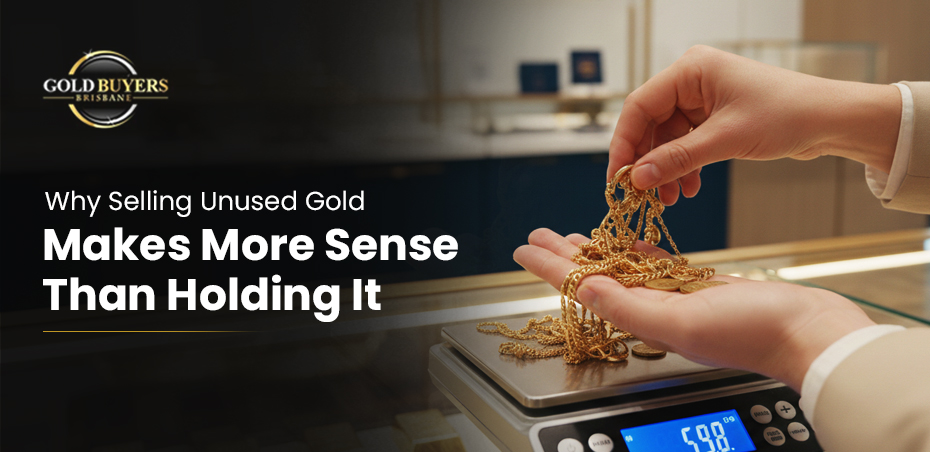
Across Australia, many households have gold jewellery tucked away in drawers, cupboards, lockers, or old jewellery boxes, often forgotten and rarely revisited. These items commonly include rings that no longer fit, broken chains, outdated designs, inherited pieces, or unused gold jewellery that no longer reflects personal style or daily wear.
Although gold is widely seen as a valuable asset, unused gold delivers no real financial benefit when it remains untouched. Many people hold onto old jewellery, believing gold will automatically increase in value or that selling should be delayed just in case. In reality, gold that is not worn, traded, or intentionally invested is simply money that is not working for you.
In many situations, selling gold jewellery for cash can unlock immediate value and convert idle assets into something useful. The funds can help manage expenses, reduce financial stress, or support more meaningful priorities, without relying on loans or long-term commitments.
What Is Considered Unused Gold?
Unused gold isn’t limited to jewellery that is visibly damaged or broken. In many cases, gold is considered unused simply because it no longer serves a purpose in everyday life.
Common examples include rings that no longer fit, necklaces that haven’t been worn for years, bracelets with broken clasps, single earrings, and pieces that feel outdated or uncomfortable. Inherited jewellery often falls into this category as well. While it may carry sentimental or historical value, it may not suit personal style or lifestyle.
Unused gold can also include scrap pieces, old coins, old gold, or jewellery that has lost stones over time. Even items stored carefully and kept in good condition are still considered unused if they remain untouched for long periods. Ultimately, regardless of design or condition, gold retains its intrinsic value based on purity and weight, not how often it is worn.
Why Simply Owning Gold Doesn’t Guarantee Value
Many people believe that simply owning gold guarantees long-term wealth. This assumption is especially common with jewellery, yet it overlooks how gold actually creates value in real financial and practical terms.
Gold Jewellery Does Not Generate Income
Gold jewellery does not earn interest, produce dividends, or compound in value over time like savings or investments. When it remains unused in storage, it generates no income and contributes nothing toward improving everyday financial stability.
Resale Value Is Based on Gold Content
The resale value of gold jewellery depends primarily on its purity and weight, not original purchase price, brand, craftsmanship, or emotional importance. While sentimental value matters personally, it rarely increases the actual amount buyers can offer.
Inflation Reduces Real Purchasing Power
Inflation gradually weakens purchasing power, meaning money locked in unused gold may lose real value over time. Without selling or reinvesting, the asset may struggle to keep pace with rising living costs and expenses.
Unused Jewellery Is a Passive Asset
Unused gold jewellery functions as a passive asset with no active financial strategy behind it. Passive assets only deliver real value once they are sold, converted into cash, or redirected toward purposeful financial goals.
Ultimately, holding onto unused jewellery in the hope that it will become more valuable can lead to missed opportunities. Selling at the right time allows gold to move from a passive possession into a practical financial resource.
How Gold Prices Actually Work
Gold prices are shaped by global market forces, not by how long someone holds onto a piece of jewellery. Factors such as worldwide demand, economic uncertainty, inflation, interest rates, and limited gold supply all influence pricing at any given time.
In Australia, gold prices are also affected by the strength of the Australian Dollar compared to the US Dollar. When the Australian Dollar weakens, the local price of gold often rises, which can make selling more attractive during certain periods.
Because gold prices constantly move up and down, no guarantee that waiting longer will lead to better returns. While gold has shown long-term stability, short-term price movements can be unpredictable. Selling unused gold when market conditions are favourable allows people to secure real value rather than rely on uncertain future price changes.
See the Real Value of Your Gold Today
Don’t let your gold sit idle while market prices are high. Visit our Brisbane office for a free, scientific XRF appraisal and see exactly how much your unused items are worth in under 10 minutes.
The Cost of Letting Gold Sit Idle
Leaving gold unused is not a neutral decision — it comes with real costs that are often overlooked. One of the biggest is opportunity cost, which refers to the benefits missed by not using an asset productively. Money tied up in unused jewellery could otherwise help cover everyday expenses, reduce existing debt, or support important financial goals.
There are also practical risks to consider. Gold jewellery stored for long periods can be misplaced, stolen, damaged, or forgotten altogether. Even when insured, coverage may not reflect the current market value. Over time, clasps can corrode, settings may loosen, and jewellery can gradually deteriorate despite careful storage.
Beyond financial and physical risks, unused gold can create emotional hesitation. Many people delay selling simply because the decision feels uncomfortable, even when the jewellery no longer serves a purpose. Over time, that hesitation can turn into missed opportunities and lost value.
Condition Doesn’t Define Value — Gold Content Does
Many people hesitate to sell gold because they assume damaged or unfashionable jewellery has little worth. In reality, gold value is determined by objective factors, not appearance.
What Actually Determines Gold Value
- Purity (Karat Rating)
Gold purity is measured in karats, such as 9K, 14K, 18K, or 24K. The higher the karat, the greater the percentage of pure gold contained in the item.
- Weight (Measured in Grams)
Gold is weighed in grams, and the total weight of pure gold directly influences its value. Heavier items typically carry higher melt value, regardless of design.
Why Condition and Design Matter Less
Broken chains, bent rings, missing stones, and outdated designs still contain gold that can be melted down and refined. Because buyers assess gold based on purity and weight, cosmetic damage rarely affects its underlying value.
The Key Takeaway
Even jewellery that appears worn, broken, or unfashionable can hold meaningful value. When assessed correctly, unused or damaged gold is often worth far more than people expect — making it worthwhile to have it professionally evaluated rather than left unused.
Emotional Value vs Practical Use
Emotional attachment often influences decisions about gold jewellery. Pieces received as gifts, inherited from family members, or tied to important memories can feel difficult to part with, even when they have not been worn or used for years.
A practical approach is to separate emotional meaning from material value. The memories associated with a piece do not disappear when it is sold. Instead, selling unused gold can allow those memories to be honoured in a more meaningful way by transforming an inactive object into something that actively supports daily life — such as financial security, memorable experiences, or new opportunities.
Ultimately, keeping items that genuinely hold personal significance while letting go of those that no longer serve a purpose can be a healthier, more intentional decision. This balance helps people move forward without losing what truly matters.
Decluttering Your Space and Simplifying Your Finances
Unused jewellery contributes to physical clutter, but it can also create mental clutter. Items that sit unused often carry a sense of “unfinished business” — something to deal with later.
Selling gold helps simplify both space and finances. Turning forgotten items into usable funds creates clarity and purpose. It’s a small step that can have a surprisingly positive psychological impact, especially for people aiming to streamline their possessions and financial priorities.
Turning Unused Gold Into Immediate Financial Flexibility
Selling unused gold offers a practical way to access money quickly and responsibly, especially when financial needs arise unexpectedly or flexibility becomes a priority.

Instant Access to Cash
Unused gold provides instant liquidity because it can be converted into cash quickly, without applications, credit checks, or repayment obligations, making it one of the fastest ways to access funds during financial pressure situations today.
No Debt or Repayment Burden
Choosing cash for gold allows people to raise money without interest charges, monthly repayments, or long-term debt, helping them avoid financial stress while maintaining control over their personal finances and short-term commitments elsewhere.
Freedom to Use Funds as Needed
Funds received from selling unused gold can be applied flexibly toward emergencies, household expenses, travel plans, investment opportunities, or savings goals, providing immediate relief without restrictions on how the money is used by the seller.
Clear and Transparent Valuation
Gold value is transparent and measurable, based on purity, weight, and live market rates, which creates a straightforward selling process and helps individuals understand exactly how their final payout is calculated before agreeing to sell.
Faster Than Selling Other Possessions
Compared to selling other personal belongings, gold retains intrinsic value, does not rely on buyer negotiation, and offers a faster, more reliable way to unlock cash when funds are required for urgent financial needs arise.
Selling unused gold transforms an inactive possession into a flexible financial resource. Rather than remaining locked away, gold can provide timely support, clarity, and control when access to money matters most.
Environmental Benefits of Recycling Gold
Selling unused gold is not only financially responsible — it is also an environmentally conscious choice. Recycling gold reduces environmental impact by limiting the need for new mining and making better use of existing resources.
- Reduces the need for new gold mining
Recycling gold decreases reliance on mining activities, which are resource-intensive and often cause land degradation, habitat disruption, and long-term environmental damage.
- Lowers water and energy consumption
Refining recycled gold typically uses far less water and energy than extracting gold from raw ore, helping conserve valuable natural resources.
- Supports a sustainable materials lifecycle
Recycled gold can be reused in jewellery, electronics, medical equipment, and other industries, extending the life of existing materials instead of extracting new ones.
- Minimises environmental footprint
By choosing recycled gold, individuals help reduce carbon emissions, waste production, and ecological strain associated with traditional mining processes.
Choosing to sell unused gold supports responsible resource use and contributes to a more sustainable future, without sacrificing value or practicality.
What Happens to Gold After It’s Sold?
Once gold is sold, it enters a professional refining process designed to recover and reuse the precious metal efficiently. Jewellery and gold items are carefully melted down, impurities removed, and the gold purified to a usable form in accordance with industry standards.
After refining, the recovered gold is reused across various industries. It may be transformed into new jewellery, incorporated into electronic and technological components, or applied in medical and industrial applications. Understanding this process helps build confidence when selling gold — unused jewellery does not go to waste but instead becomes part of a continuous cycle of reuse, sustainability, and value creation.
For Deep Insight, Read: From Your Drawer to a New Beginning: What Happens to Gold After You Sell It?
Why Waiting “For Later” Often Means Missed Opportunity
Many people plan to sell gold “someday,” but that moment often never arrives. As time passes, market conditions change, personal priorities shift, and unused jewellery remains untouched year after year.
In most cases, waiting is driven by uncertainty rather than a clear financial strategy. Without a defined investment plan, delaying a sale can mean missing favourable pricing periods or continuing to hold an asset that provides no practical benefit.
Choosing to act when gold is clearly unused allows individuals to make thoughtful, informed decisions. Rather than reacting to pressure or unexpected circumstances later, selling at the right time helps turn a passive possession into a purposeful financial choice.
How Gold Is Valued When You Sell
Gold valuation follows a clear, objective process based on measurable factors rather than appearance or sentiment. Understanding how this process works helps sellers feel confident and informed when receiving an offer.
Step 1: Purity Testing
Gold purity is tested using professional methods to determine its karat level, such as 9K, 14K, 18K, or 24K. This identifies how much pure gold is contained in each item.
Step 2: Accurate Weight Measurement
Once purity is confirmed, gold items are weighed in grams. The total weight of pure gold directly affects the item’s value and forms the basis of the payout calculation.
Step 3: Applying Current Market Prices
The current market price of gold is then applied to the measured purity and weight. Because gold prices fluctuate, valuations can change based on market conditions at the time of selling.
What Affects the Final Payout
Final offers may vary depending on buyer transparency, testing accuracy, and how clearly pricing is explained. Knowing how valuation works empowers sellers to ask informed questions and recognise fair, market-based offers.
How to Prepare Before Selling Your Gold
A little preparation can make the selling process smoother and more transparent. Knowing what to expect helps sellers feel confident and avoid unnecessary stress or confusion.
Sort items by karat if possible
Separating gold items by karat, such as 9K, 14K, or 18K, can save time during evaluation and help you better understand how each piece is accurately assessed by the buyer.
Bring valid identification
Most gold buyers require valid identification as part of standard compliance procedures, so bringing ID in advance helps avoid delays and ensures the selling process moves forward smoothly without issues.
Avoid cleaning or polishing jewellery
Cleaning or polishing gold jewellery does not increase its value and may cause damage, since gold is valued based on purity and weight rather than appearance or surface condition alone.
Set realistic value expectations
Setting realistic expectations based on gold content and current market prices helps sellers feel confident, avoid disappointment, and better understand why original purchase prices or sentiment rarely affect resale value.
Being prepared allows sellers to approach the process calmly and ensures a fair, transparent experience when turning unused gold into cash.
Choosing a Reliable Gold Buyer
Trust plays a crucial role when selling gold. A reliable buyer should explain the valuation process clearly, test and weigh your items in front of you, and base their offer on transparent, market-linked pricing rather than vague estimates.
Experience also makes a meaningful difference. Working with established Gold Brokers Brisbane helps ensure valuations are handled professionally and that sellers fully understand how purity, weight, and pricing are assessed. Clear communication, upfront explanations, and a no-pressure approach are strong indicators that you are dealing with a buyer who prioritises fairness and transparency.
Common Mistakes People Make When Selling Gold
Many issues during the gold-selling process arise not from the market itself, but from avoidable misunderstandings. Being aware of common mistakes helps sellers make informed decisions and approach the process with confidence.
Not understanding purity or weight
Some sellers do not know the karat or approximate weight of their gold, making it difficult to assess whether an offer is fair or accurately reflects the item’s true value.
Accepting offers without clear explanations
Agreeing to a price without understanding how it was calculated can lead to underpayment. Reputable buyers should clearly explain testing methods, weight measurements, and pricing.
Assuming damaged jewellery has little value
Broken, bent, or outdated jewellery still contains gold. Value is based on purity and weight, not appearance, meaning many damaged items are worth more than expected.
Delaying the decision due to emotional hesitation
Emotional attachment can cause people to postpone selling even when jewellery no longer serves a purpose. Delays can result in missed opportunities or unfavourable market timing.
Understanding these common mistakes allows sellers to avoid unnecessary losses and approach gold selling with clarity, confidence, and realistic expectations.
Is Now the Right Time to Sell Gold?
There is no single “perfect” time to sell gold, as the right decision depends on individual circumstances rather than market timing alone. Factors such as personal financial needs, whether the gold is being used, and general awareness of market conditions all play an important role.
Selling often makes sense when gold is unused, current prices are reasonable, and the funds could serve a more practical purpose elsewhere. On the other hand, holding may be appropriate if the gold is part of a clear, long-term investment strategy rather than sitting idle. Ultimately, the most important factor is making an informed, deliberate decision — instead of holding onto gold out of habit or uncertainty.
Conclusion: Let Your Gold Work for You
Unused gold represents untapped value. When jewellery sits untouched, it offers no financial return or practical benefit. Selling gold allows you to convert dormant assets into something useful—whether that’s financial relief, a new opportunity, or simply peace of mind.
By understanding how gold value works and choosing transparency over hesitation, selling becomes a confident, empowering decision. Instead of letting your gold sit forgotten, you can make it work for you today.
Ready to Turn Your Unused Gold into Instant Cash?
Visit our store for a confidential, no-obligation appraisal
About the Author
Raj, Specialist at Gold Buyers Brisbane
With deep expertise in the gold buying industry, Raj leads Gold Buyers Brisbane’s mission to provide fair and transparent cash offers for gold. Committed to customer satisfaction, Raj ensures clients receive trusted valuations and seamless transactions, leveraging extensive knowledge of the local market and current gold trends.
About the Company
Gold Buyers Brisbane is a premier gold buying service based in Brisbane, dedicated to offering the highest cash payouts for gold. With a focus on trust, transparency, and expert evaluations, Gold Buyers Brisbane helps customers get the best value for their gold items quickly and securely. Serving the Brisbane community, the company blends industry expertise with customer-centric service to make gold selling a confident and rewarding experience.
Frequently Asked Questions
-
Does broken gold still have value?
Yes. Broken gold still holds value because buyers assess gold based on purity and weight, not appearance. Bent rings, snapped chains, or missing stones can all be refined and reused. As long as the item contains gold, it can usually be sold for its metal content without any added requirements. -
Is it better to sell gold or keep it?
It depends on your situation. Selling gold is often better when jewellery is unused, and the funds could serve a practical purpose. Keeping gold may make sense if it forms part of a long-term investment strategy rather than sitting idle without benefit over extended periods, with clear financial planning goals defined. -
Is it worth selling gold now?
It can be worth selling gold now if it is unused and current prices are reasonable. Because gold prices fluctuate, waiting does not guarantee better returns. Selling allows you to realise value today instead of relying on uncertain future market movements while supporting immediate financial flexibility and clearer decision-making confidence. -
Is selling gold taxable in Australia?
In Australia, tax depends on the item’s classification. Most personal jewellery is a "collectable"; if acquired for $500 or less, profits are typically tax-exempt. "Personal use assets" (like gold watches) have a $10,000 threshold. However, gold bullion held for investment is generally subject to Capital Gains Tax (CGT). -
Can inherited gold be sold?
Yes. Inherited gold can be sold in the same way as other gold items. Value is assessed based on purity and weight, not ownership history. In some cases, tax considerations may apply, so understanding obligations before selling helps avoid unexpected issues and ensures smoother decision-making throughout the entire process.
 Previous